It is often a layered system: clothing, education, work, marriage, public space and reputation.
Editorial research platform
Weight on Women Power, restriction and resistance in Islamic contexts
Weight on Women is an editorial research platform examining how law, religious interpretation, social pressure and patriarchal authority shape the lives of women in Islamic contexts. Through dossiers, analysis and source-based material, the website documents the systems that normalize inequality while also highlighting resistance, voice and survival.
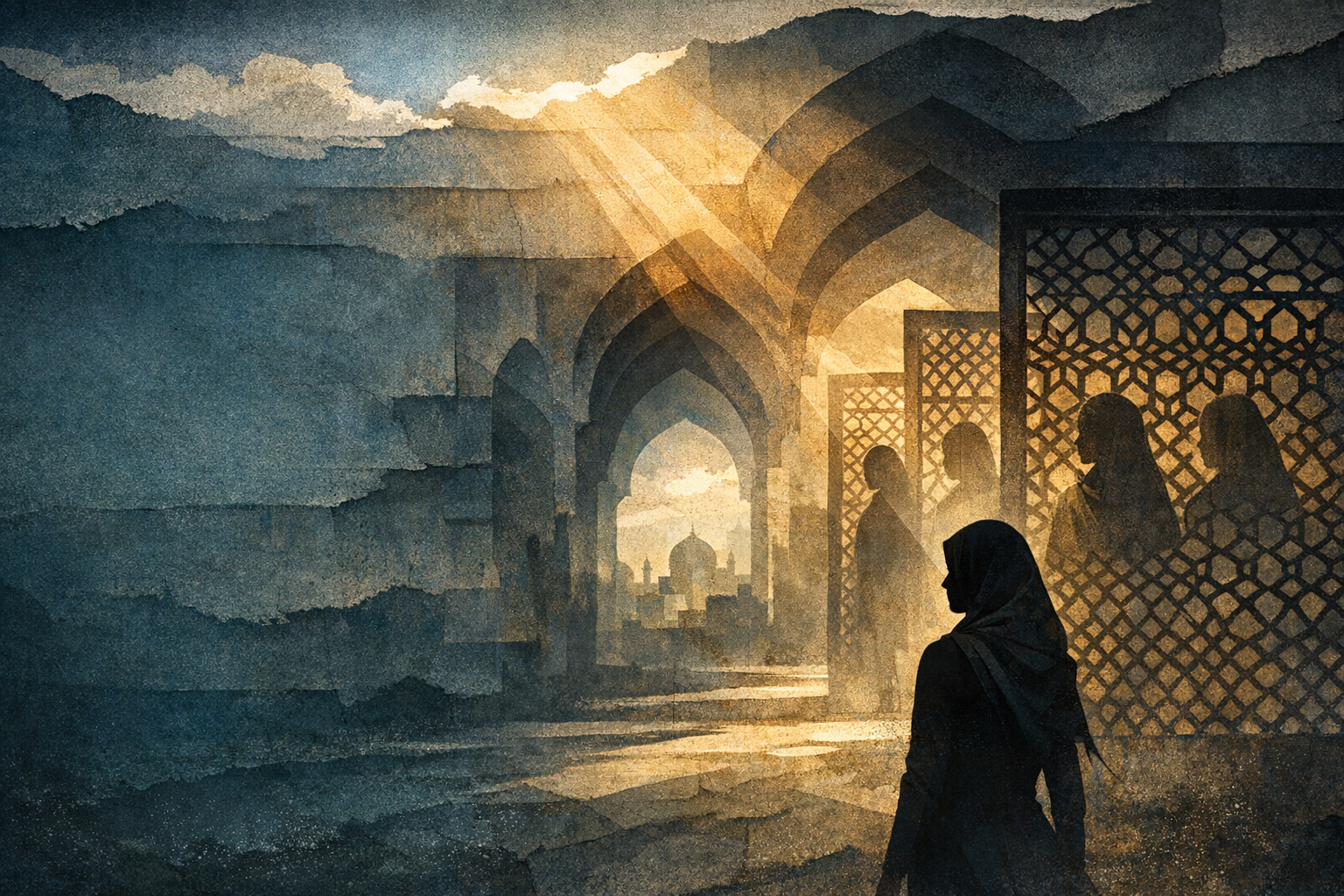
The site looks at how religious language and state power can together legitimize inequality.
Stories of pressure are deliberately linked here to voice, resistance and survival strategy.
What the site shows
Three layers that keep intertwining
The law
Personal status laws, clothing rules and educational restrictions show how inequality can be fixed legally or administratively.
The social space
Shame, reputation, family honor and public control mean that women are constrained not only by the state, but also by their surroundings.
Resistance
Despite the risks, women keep learning, publishing, protesting, helping, documenting and reforming. That resistance is a red thread through the whole website.
Editorial reading
Oppression is often visible in the ordinary routines of daily life
Not every form of control appears as open violence. Sometimes it is found in having to ask, hide, obey, avoid or remain silent. This website makes those subtle and structural layers visible without reducing the subject to sensational images.
That is why the site moves between country dossiers, contextual explanation, visual symbolism and source material. The result is a journalistic website with the rhythm of a digital dossier.
Atlas of pressure
Where control takes hold
Clothing and visibility
The body becomes a political surface: something that must be covered, directed or sanctioned.
Education
Whoever restricts learning also restricts income, voice, autonomy and future.
Marriage and family
Unequal rules around divorce, guardianship, obedience or consent deepen dependence.
Public space
Access to the street, workplace and governance determines who is allowed to be visible and who is pushed out of view.
Afghanistan
Exclusion as a model of rule
In Afghanistan, the exclusion of girls and women from education and public life has been described by international organizations as extreme and systemic.
Read dossierIran
Clothing as an instrument of coercion
In Iran, the struggle around compulsory veiling collides with questions of state power, punishment, public morality and civil disobedience.
Read dossierSaudi Arabia
Reform and residual control side by side
Formal progress does not mean that legal inequality or social dependence have disappeared.
Read dossierMethod
No transcripts, but a transparent structure
Because no transcripts were available for this project, the website was built from a combination of briefing, reliable sources and editorial structuring. The full source selection and project notes are brought together on the sources page.
View the source base